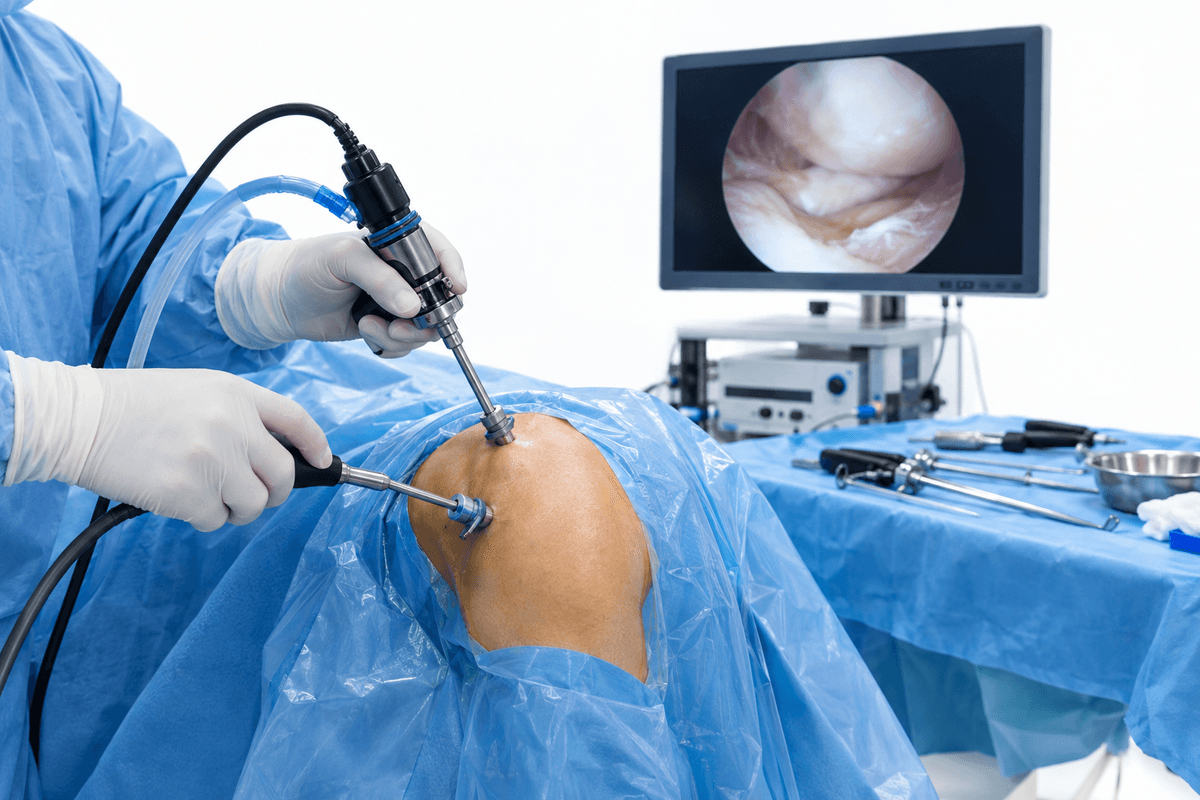
Performed by Dr. Samuel Lenald at Dr Samuel lenald
Arthroscopic knee surgery in Kadapa is a minimally invasive procedure that uses a small camera and specialized instruments to diagnose and treat various knee joint problems. This advanced technique allows for precise treatment of meniscal tears, ligament injuries, cartilage damage, and other knee conditions with smaller incisions, reduced pain, and quicker recovery compared to traditional open surgery. Dr Samuel Lenald performs state-of-the-art arthroscopic knee procedures with exceptional surgical precision and patient-focused care.
We believe in honest, upfront disclosure so you can make an informed decision.
A step-by-step look at what happens during this procedure.
The patient receives spinal or general anesthesia to ensure comfort throughout the procedure. The anesthesiologist monitors vital signs continuously to maintain patient safety.
Small incisions are made around the knee joint, and a thin arthroscope with a camera is inserted to visualize the internal structures on a monitor, allowing detailed examination of cartilage, ligaments, and menisci.
The surgeon carefully examines the knee joint structures through the arthroscopic camera to identify the exact location and extent of damage, tears, or abnormalities requiring treatment.
Using specialized miniature instruments inserted through additional small incisions, the surgeon performs necessary repairs such as trimming torn meniscus, reconstructing ligaments, removing loose bodies, or smoothing damaged cartilage.
After completing the repair, instruments are removed, incisions are closed with sutures or surgical tape, and sterile dressings are applied. The knee may be wrapped in a compression bandage to minimize swelling.
A structured, patient-first approach from first consultation to full recovery.
Dr Samuel Lenald conducts thorough clinical examination, reviews imaging studies including MRI and X-rays, and discusses patient concerns to create a personalized surgical plan tailored to individual needs and goals.
Using state-of-the-art arthroscopic equipment and high-definition imaging, Dr Samuel Lenald performs precise surgical interventions with minimal tissue trauma, ensuring optimal outcomes and faster healing.
Dr Samuel Lenald implements multimodal pain management strategies including nerve blocks, appropriate medications, and cold therapy to ensure patient comfort during recovery and minimize post-operative discomfort.
A customized physical therapy and rehabilitation program is designed by Dr Samuel Lenald to restore knee strength, flexibility, and function, with regular follow-up appointments to monitor progress and adjust treatment as needed.
What to expect at each stage of your recovery journey.
The first 24-48 hours involve rest, ice application, elevation of the leg, and pain management. Patients may use crutches for support and should keep the surgical site clean and dry. Gentle ankle and quadriceps exercises help prevent blood clots.
During weeks 1-3, patients gradually increase weight-bearing as tolerated, begin formal physical therapy focusing on range of motion and gentle strengthening exercises, and attend follow-up appointments for wound assessment and progress evaluation.
From week 4 onwards, patients engage in progressive strengthening exercises, proprioceptive training, and functional activities. Sports-specific training begins around 3 months post-surgery, with gradual return to full activity based on individual healing and strength restoration.
Most patients experience substantial reduction in knee pain within weeks of surgery, with continued improvement over several months as healing progresses and strength returns through rehabilitation.
Arthroscopic surgery effectively restores knee stability, range of motion, and mechanical function, allowing patients to perform daily activities, sports, and recreational pursuits with confidence and comfort.
By addressing meniscal tears, cartilage damage, and loose bodies, arthroscopic surgery prevents progressive joint deterioration and reduces the risk of developing early-onset osteoarthritis in the affected knee.
The minimally invasive nature of arthroscopic surgery enables faster recovery compared to open procedures, with most patients returning to work within 2-4 weeks and resuming athletic activities within 3-6 months depending on the specific repair performed.
Let's clear up some of the most common myths about arthroscopic surgeries-knee.
Get a personalised assessment from an experienced specialist. Understand your options, ask your questions, and decide with confidence.