Treated by Dr. Samuel Lenald at Dr Samuel lenald
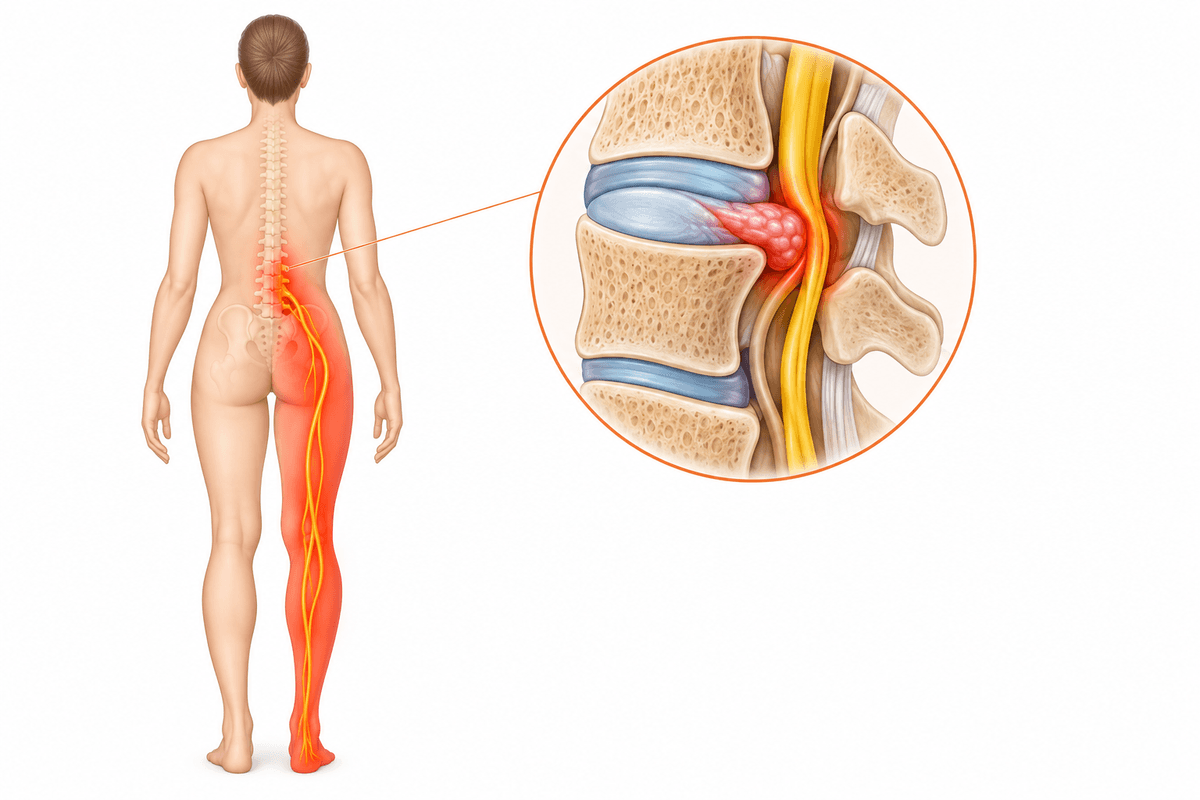
Sciatica is a condition causing pain that radiates along the sciatic nerve from the lower back through the hips and down each leg, commonly affecting residents in Kadapa. It typically occurs when a herniated disk, bone spur, or spinal stenosis compresses part of the nerve, causing inflammation, pain, and numbness in the affected leg. Dr Samuel Lenald provides comprehensive orthopedic care for sciatica patients, offering both conservative and surgical treatment options tailored to individual needs.
Sudden onset sciatic nerve pain lasting 4-8 weeks, often resolving with conservative treatment and rest. Typically caused by acute disc herniation or sudden nerve compression.
Persistent or recurrent sciatic pain lasting more than 12 weeks, often requiring more intensive treatment approaches. May result from degenerative disc disease, spinal stenosis, or ongoing nerve compression.
Rare form affecting both legs simultaneously, indicating severe spinal canal narrowing or central disc herniation. Requires immediate medical evaluation due to potential cauda equina syndrome risk.
Multiple factors can contribute to the development and progression of this condition.
Sciatica develops gradually. Recognising symptoms early gives you more treatment options.
From conservative to surgical — we always start with the least invasive option first.
A structured, patient-first approach from first visit to full recovery.
Dr Samuel Lenald conducts thorough physical examination including straight leg raise test, neurological assessment of reflexes, muscle strength, and sensory function to determine the exact location and severity of nerve compression.
Dr Samuel Lenald orders appropriate imaging studies including MRI or CT scans to visualize disc herniation, spinal stenosis, or other structural abnormalities, ensuring accurate diagnosis and treatment planning.
Dr Samuel Lenald develops individualized treatment protocols starting with conservative approaches like physical therapy and medications, progressing to injections or surgical options only when necessary based on patient response and symptom severity.
Dr Samuel Lenald provides ongoing monitoring with scheduled follow-up appointments, adjusts treatment as needed, and guides patients through comprehensive rehabilitation programs to prevent recurrence and optimize long-term outcomes.
What to expect at each phase of recovery.
Focus on reducing acute inflammation and pain through rest, medications, and gentle movements. Patients gradually resume light daily activities while avoiding aggravating positions and heavy lifting.
Structured physical therapy program emphasizing core strengthening, flexibility exercises, and gradual return to normal activities. Most patients achieve significant functional improvement and pain reduction during this phase.
Long-term exercise program, ergonomic modifications, and lifestyle adjustments to maintain improvement and prevent recurrence. Patients return to full activities including work and sports with proper body mechanics awareness.
Over 80% of patients experience substantial relief from radiating leg pain within 6-12 weeks of appropriate treatment, with many achieving complete pain resolution.
Restoration of normal walking ability, sitting tolerance, and daily activity performance without limitations. Most patients regain full range of motion and strength in affected leg.
Majority of patients successfully return to occupational duties and recreational activities within 3-6 months, with proper body mechanics and preventive strategies in place.
Long-term success with maintained core strength, proper posture, and lifestyle modifications significantly reduces risk of future sciatica episodes and chronic back problems.
Untreated sciatica can progress to permanent nerve damage resulting in chronic pain, persistent numbness, and permanent muscle weakness in the affected leg. Prolonged nerve compression may lead to foot drop, difficulty walking, and loss of bladder or bowel control in severe cases. Early intervention significantly improves outcomes and prevents irreversible neurological complications.
Seek immediate medical attention from Dr Samuel Lenald if you experience sudden severe lower back pain with radiating leg pain, numbness in the groin area, or loss of bladder/bowel control indicating possible cauda equina syndrome. Schedule an appointment if leg pain persists beyond a week, progressively worsens, or is accompanied by significant weakness affecting your ability to walk or stand. Early evaluation ensures timely diagnosis and prevents progression to chronic or irreversible nerve damage.
Early treatment means more options and better outcomes. Book a consultation to understand your condition and explore the right path forward.