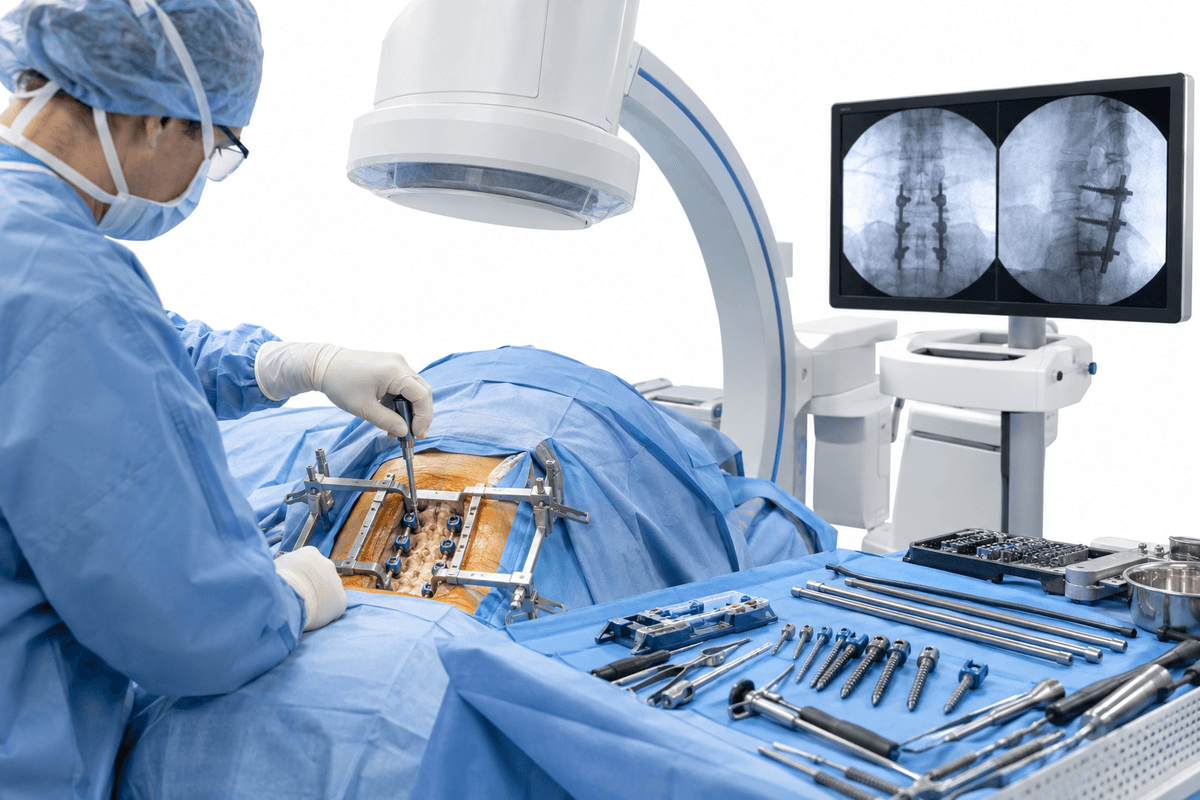
Performed by Dr. Samuel Lenald at Dr Samuel lenald
Spine Surgeries in Kadapa address a wide range of spinal conditions including herniated discs, spinal stenosis, scoliosis, and degenerative disc disease through both traditional and minimally invasive surgical approaches. These procedures aim to relieve pain, restore function, and improve quality of life for patients suffering from chronic back and neck conditions. Dr Samuel Lenald specializes in delivering personalized spine surgery solutions tailored to each patient's unique anatomical and clinical needs.
We believe in honest, upfront disclosure so you can make an informed decision.
A step-by-step look at what happens during this procedure.
Comprehensive evaluation including physical examination, imaging studies like MRI or CT scans, and review of medical history to determine the exact spinal pathology and appropriate surgical approach.
General anaesthesia is administered to ensure the patient remains unconscious and pain-free throughout the surgical procedure while vital signs are continuously monitored.
The surgeon creates an incision to access the affected spinal area, using either traditional open techniques or minimally invasive approaches depending on the condition being treated.
The specific surgical intervention is performed, which may include disc removal, spinal fusion, decompression of nerve roots, correction of deformities, or stabilization with implants and bone grafts.
The incision is carefully closed in layers, dressings are applied, and the patient is moved to recovery where they are monitored as anaesthesia wears off before transfer to the ward.
A structured, patient-first approach from first consultation to full recovery.
Dr Samuel Lenald conducts thorough evaluations using advanced imaging and diagnostic tools to create customized surgical plans that address each patient's specific spinal condition and overall health status.
Utilizing both traditional and minimally invasive spine surgery techniques, Dr Samuel Lenald employs state-of-the-art equipment and methods to minimize tissue damage, reduce recovery time, and optimize surgical outcomes.
Dr Samuel Lenald provides detailed post-operative instructions, pain management protocols, and coordinates with physiotherapy specialists to ensure proper healing and functional restoration throughout the recovery process.
Regular follow-up appointments are scheduled to monitor healing progress, address any concerns, adjust rehabilitation programs, and ensure patients achieve optimal long-term spinal health and mobility.
What to expect at each stage of your recovery journey.
The first 3-5 days involve hospital stay with pain management, wound care, and assisted mobility. Patients gradually transition from bed rest to walking with support while surgical site healing begins.
Weeks 2-6 focus on gentle movements, prescribed physiotherapy exercises, and gradual increase in daily activities. Patients avoid heavy lifting, bending, or twisting while the spine heals and strengthens.
Weeks 6-12 involve progressive strengthening exercises, return to work for sedentary jobs, and continued physiotherapy. Most patients experience significant pain reduction and improved function during this phase with full recovery typically achieved by 3-6 months.
Most patients experience substantial relief from chronic back or neck pain, with studies showing 80-90% reporting significant improvement in pain scores within 3-6 months post-surgery.
Patients typically regain lost range of motion and ability to perform daily activities without limitation, returning to work and recreational activities they previously could not enjoy.
Numbness, tingling, and weakness in extremities caused by nerve compression often resolve completely or improve significantly following successful decompression procedures.
Beyond physical improvements, patients report better sleep quality, reduced dependence on pain medications, improved mental health, and overall satisfaction with their ability to engage in normal life activities.
Let's clear up some of the most common myths about spine surgeries.
Get a personalised assessment from an experienced specialist. Understand your options, ask your questions, and decide with confidence.