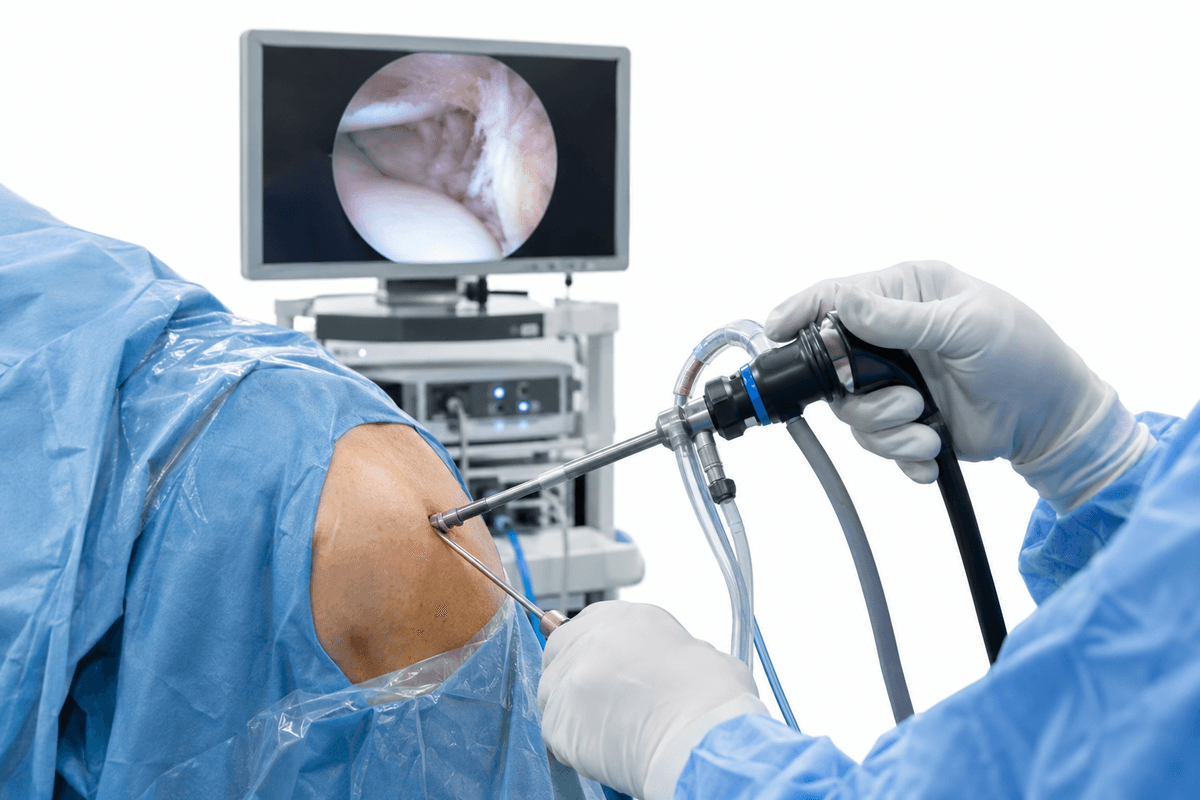
Performed by Dr. Samuel Lenald at Dr Samuel lenald
Arthroscopic shoulder surgery in Kadapa is a minimally invasive procedure that uses a tiny camera and specialized instruments to diagnose and treat various shoulder joint problems including rotator cuff tears, labral tears, and impingement. This advanced technique allows for smaller incisions, reduced scarring, less pain, and quicker recovery compared to traditional open surgery. Dr Samuel Lenald performs these specialized orthopedic procedures with precision and expertise.
We believe in honest, upfront disclosure so you can make an informed decision.
A step-by-step look at what happens during this procedure.
General anesthesia or regional nerve block is administered to ensure patient comfort throughout the procedure while maintaining stable vital signs.
Small incisions called portals are made around the shoulder, and a pencil-thin arthroscope with a camera is inserted to visualize the joint interior on a monitor.
The surgeon thoroughly examines all shoulder structures including the rotator cuff, labrum, cartilage, and surrounding tissues to identify the extent of damage or pathology.
Specialized miniature instruments are inserted through additional portals to repair torn tissues, remove damaged cartilage, eliminate bone spurs, or stabilize the joint as needed.
Instruments are removed, incisions are closed with sutures or surgical tape, and sterile dressings are applied before transferring the patient to recovery.
A structured, patient-first approach from first consultation to full recovery.
Dr Samuel Lenald conducts thorough physical examination, reviews imaging studies including MRI and X-rays, and discusses patient goals to create a personalized surgical plan tailored to each individual's condition.
Using state-of-the-art arthroscopic equipment and high-definition imaging, Dr Samuel Lenald performs precise repairs with minimal tissue trauma, ensuring optimal visualization of all shoulder structures throughout the procedure.
Dr Samuel Lenald employs specialized techniques specific to each condition, whether repairing rotator cuff tears with strong suture anchors, stabilizing labral tears, or addressing impingement through subacromial decompression.
Dr Samuel Lenald provides detailed post-operative instructions and coordinates with physiotherapists to ensure progressive rehabilitation, monitoring healing progress and adjusting therapy to optimize functional recovery and return to activities.
What to expect at each stage of your recovery journey.
The shoulder is immobilized in a sling for protection during the first 2-4 weeks. Pain management with prescribed medications, ice application, and gentle hand and elbow exercises are emphasized. Keeping incisions clean and dry is essential to prevent infection.
Weeks 2-6 involve gradual introduction of passive and active-assisted range of motion exercises under physiotherapy guidance. The sling may be discontinued based on healing progress. Focus is on regaining shoulder mobility while protecting healing tissues from excessive stress.
From week 8 onwards, progressive resistance exercises strengthen rotator cuff and shoulder blade muscles. Functional activities are gradually reintroduced with sport-specific training for athletes. Most patients achieve significant improvement by 3-4 months with full recovery by 4-6 months depending on the extent of repair.
Most patients experience significant reduction in shoulder pain within 3-6 months, with improved ability to perform daily activities like reaching overhead, lifting objects, and sleeping comfortably without discomfort.
Arthroscopic surgery combined with dedicated physiotherapy helps restore near-normal shoulder mobility, allowing patients to regain flexibility and movement patterns that were limited before surgery.
Repairs to labral tears and capsular structures provide improved joint stability, reducing the risk of recurrent dislocations and instability episodes that previously affected activities and quality of life.
Athletes and active individuals typically return to their sports and recreational activities within 4-6 months, with many achieving performance levels equal to or better than pre-injury status following complete rehabilitation.
Let's clear up some of the most common myths about arthroscopic surgeries-shoulder.
Get a personalised assessment from an experienced specialist. Understand your options, ask your questions, and decide with confidence.