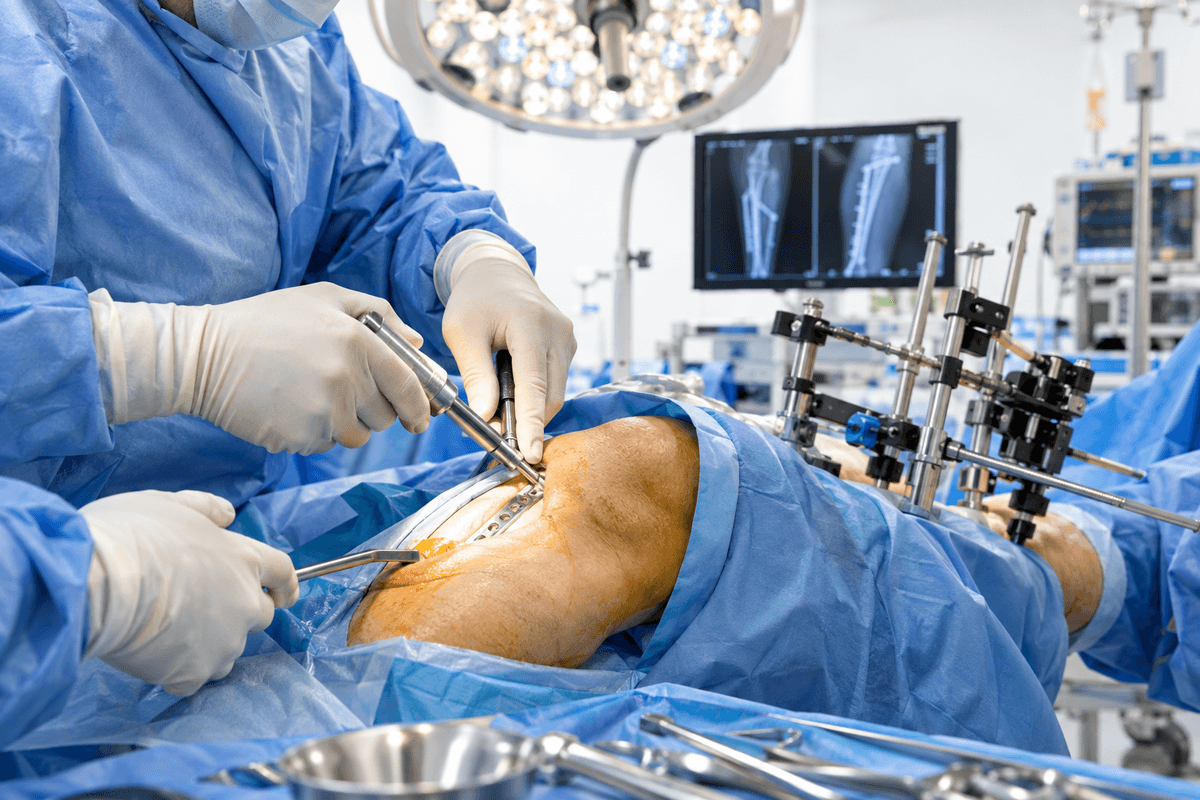
Performed by Dr. Samuel Lenald at Dr Samuel lenald
Complex trauma treatment in Kadapa addresses severe musculoskeletal injuries involving multiple fractures, soft tissue damage, and joint disruptions. These life-altering injuries require immediate specialized orthopedic intervention to prevent permanent disability and restore optimal function. Dr Samuel Lenald provides comprehensive complex trauma care using advanced surgical techniques and personalized rehabilitation protocols.
We believe in honest, upfront disclosure so you can make an informed decision.
A step-by-step look at what happens during this procedure.
Immediate evaluation of injury severity, vital signs stabilization, and comprehensive imaging to identify all fractures, vascular injuries, and soft tissue damage requiring surgical intervention.
Detailed analysis of fracture patterns, soft tissue involvement, and neurovascular status to determine the optimal surgical approach, fixation methods, and timing of intervention.
Precise realignment of fractured bones using open or minimally invasive techniques, followed by internal fixation with plates, screws, rods, or external fixators to ensure anatomical restoration.
Repair of damaged muscles, tendons, ligaments, and blood vessels to restore structural integrity, ensure adequate blood supply, and prevent complications like compartment syndrome.
Careful closure of surgical incisions with drain placement as needed, application of sterile dressings, and immobilization using casts or splints to protect the surgical reconstruction during initial healing.
A structured, patient-first approach from first consultation to full recovery.
Dr Samuel Lenald ensures rapid evaluation and stabilization of complex trauma patients with priority assessment of life-threatening injuries, followed by comprehensive orthopedic examination and advanced imaging to plan definitive treatment.
Utilizing state-of-the-art fixation techniques including locked plating systems, intramedullary nailing, and external fixation, Dr Samuel Lenald performs precise fracture reduction and stabilization to achieve optimal anatomical alignment and promote rapid healing.
Dr Samuel Lenald collaborates with vascular surgeons, plastic surgeons, and critical care specialists when necessary to address all aspects of complex trauma, ensuring comprehensive management of associated injuries and complications.
Following surgical stabilization, Dr Samuel Lenald develops individualized physiotherapy and rehabilitation programs tailored to each patient's injury pattern, promoting progressive weight-bearing, range of motion restoration, and return to functional activities.
What to expect at each stage of your recovery journey.
First 2-3 weeks focus on pain management, wound care, and prevention of complications. Patients remain hospitalized with close monitoring for infection, compartment syndrome, and deep vein thrombosis. Gentle passive range of motion exercises begin under supervision.
Weeks 3-12 involve progressive physiotherapy to restore joint mobility, muscle strength, and functional movement patterns. Graduated weight-bearing protocols are introduced based on fracture healing progress monitored through serial X-rays and clinical assessment.
Months 3-12 focus on restoring full strength, endurance, and functional capacity through intensive rehabilitation. Patients gradually return to daily activities, work, and recreational pursuits with ongoing monitoring to ensure complete bone union and optimal long-term outcomes.
Successful anatomical alignment and stable fixation of complex fractures achieve bone union rates exceeding 90%, restoring skeletal stability and preventing long-term deformity or functional impairment.
Comprehensive rehabilitation protocols enable most patients to regain 80-95% of pre-injury function, returning to daily activities, occupational tasks, and recreational pursuits with minimal residual limitations.
Proper fracture reduction and stabilization significantly reduce chronic pain, with most patients experiencing substantial pain relief within 3-6 months and achieving comfortable, pain-free movement by one year post-surgery.
Expert surgical management and vigilant post-operative care minimize risks of infection, non-union, malunion, and post-traumatic arthritis, ensuring optimal long-term skeletal health and quality of life.
Let's clear up some of the most common myths about complex trauma.
Get a personalised assessment from an experienced specialist. Understand your options, ask your questions, and decide with confidence.