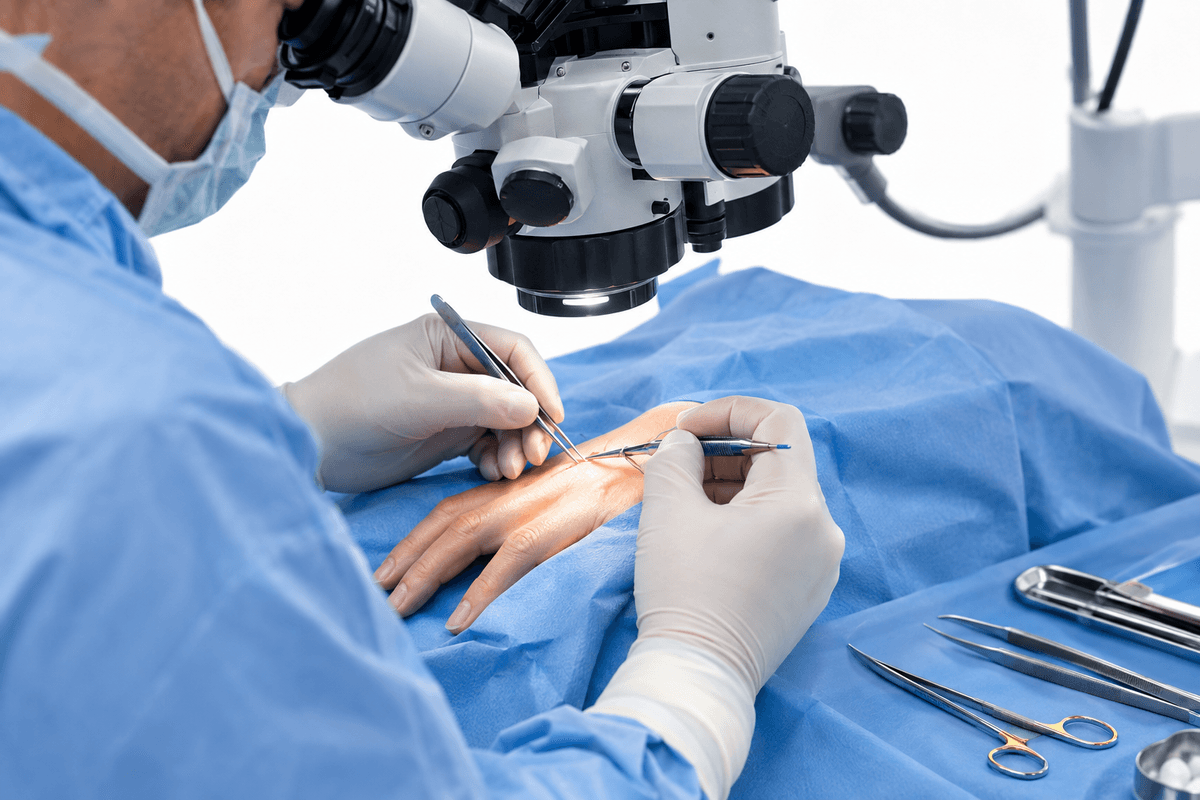
Performed by Dr. Samuel Lenald at Dr Samuel lenald
Hand and Microsurgery in Kadapa represents advanced orthopedic treatment for complex injuries and conditions affecting the hand, wrist, and upper extremities. Using precision microscopic techniques, this specialized surgery addresses nerve damage, tendon injuries, vascular repair, and tissue reconstruction with exceptional accuracy. Dr Samuel Lenald provides expert microsurgical care tailored to restore hand function and improve quality of life.
We believe in honest, upfront disclosure so you can make an informed decision.
A step-by-step look at what happens during this procedure.
Comprehensive evaluation including detailed imaging, nerve conduction studies, and vascular assessment to map the surgical approach and identify all damaged structures requiring repair.
Under magnification, precise incisions are made to access damaged nerves, tendons, blood vessels, or bone structures while preserving surrounding healthy tissue and minimizing trauma.
Using high-powered surgical microscopes and specialized micro-instruments, damaged structures are meticulously repaired with sutures finer than human hair, ensuring precise alignment and optimal healing.
Severed blood vessels and nerves are carefully reconnected using microscopic techniques to restore circulation and nerve signal transmission, critical for tissue survival and function.
The surgical site is carefully closed in layers, and the hand is immobilized in a protective splint or cast to maintain proper positioning during initial healing phases.
A structured, patient-first approach from first consultation to full recovery.
Dr Samuel Lenald conducts thorough clinical examination combined with high-resolution imaging and electrodiagnostic studies to precisely identify all injured structures and plan the microsurgical approach.
Utilizing state-of-the-art surgical microscopes and specialized micro-instruments, Dr Samuel Lenald performs delicate repairs with exceptional precision, ensuring optimal alignment of nerves, tendons, and vessels.
Dr Samuel Lenald designs personalized post-operative rehabilitation programs including specialized hand therapy, progressive exercises, and regular monitoring to maximize functional recovery and prevent complications.
Dr Samuel Lenald provides ongoing assessment of healing progress, nerve regeneration, and functional outcomes with adjustments to therapy protocols as needed to ensure complete recovery.
What to expect at each stage of your recovery journey.
The hand remains immobilized in a protective splint with elevation recommended to minimize swelling. Pain management is provided, and wound care instructions are given. Gentle passive range-of-motion exercises may begin under supervision to prevent stiffness.
Once initial healing occurs, structured hand therapy begins with progressive exercises to restore mobility, strength, and coordination. Protective splinting may continue during this phase, with gradual increases in activity levels as healing progresses.
Advanced rehabilitation focuses on restoring fine motor skills, grip strength, and dexterity through specialized exercises and functional activities. Patients progressively return to normal daily activities and work tasks as strength and nerve function continue to improve over several months.
Successful microsurgery restores critical hand functions including grip strength, fine motor control, and dexterity, enabling patients to perform daily activities and return to work with significantly improved capabilities.
Precise nerve repair promotes gradual regeneration and restoration of sensation and motor function, with progressive improvement continuing for up to 12-18 months post-surgery as nerves heal and reconnect.
Patients experience substantial improvements in independence, ability to perform self-care tasks, and participation in recreational activities, with reduced pain and enhanced overall hand functionality.
Advanced microsurgical techniques minimize scarring while maximizing functional outcomes, resulting in hands that not only work better but also maintain improved aesthetic appearance compared to untreated injuries.
Let's clear up some of the most common myths about hand and microsurgery.
Get a personalised assessment from an experienced specialist. Understand your options, ask your questions, and decide with confidence.