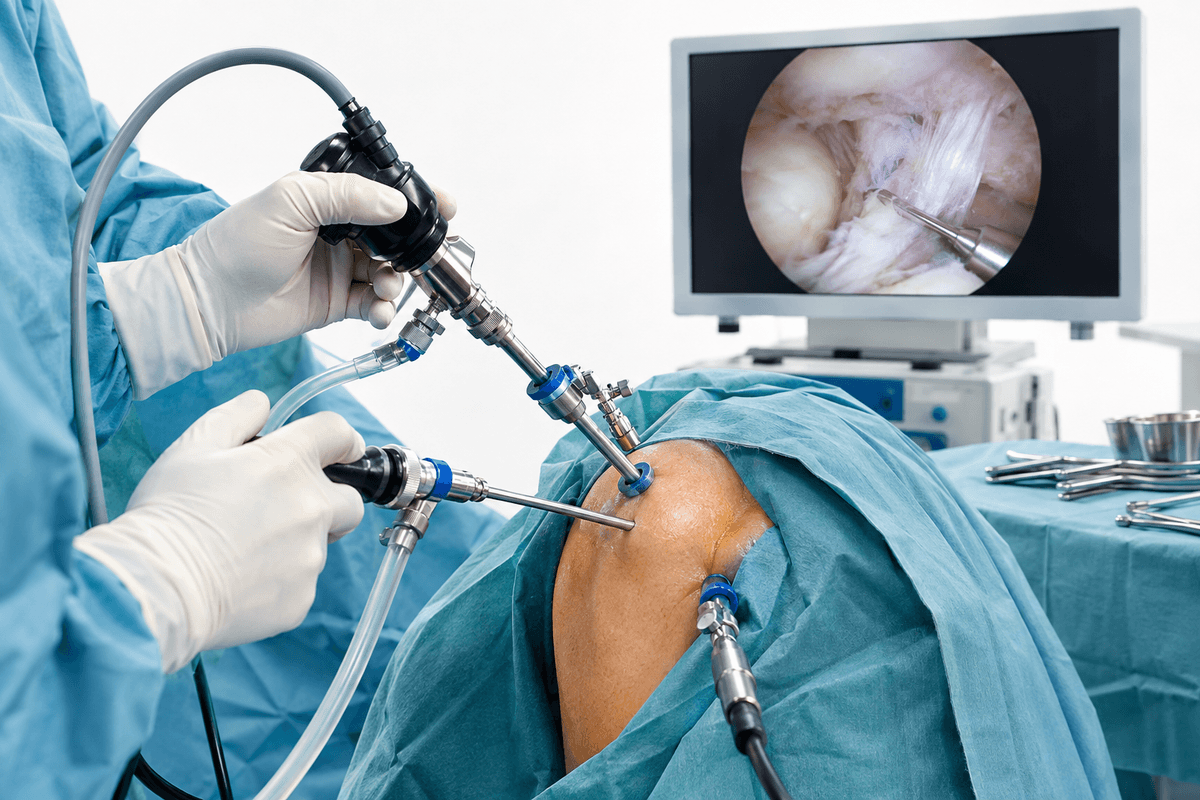
Performed by Dr. Samuel Lenald at Dr Samuel lenald
Tendons and ligament tears in Kadapa require specialized orthopedic intervention to restore joint stability and function. These injuries commonly occur during sports activities, accidents, or degenerative conditions, affecting shoulders, knees, ankles, and other joints. Dr Samuel Lenald provides comprehensive diagnosis and treatment using advanced surgical and non-surgical techniques tailored to each patient's condition and activity level.
We believe in honest, upfront disclosure so you can make an informed decision.
A step-by-step look at what happens during this procedure.
Comprehensive physical examination combined with MRI or ultrasound imaging identifies the exact location, severity, and nature of the tendon or ligament tear to determine the optimal treatment approach.
Based on tear severity, the surgeon chooses between arthroscopic minimally invasive techniques or open surgical repair, ensuring the best access to damaged structures while minimizing tissue trauma.
Torn tendon or ligament ends are carefully reapproximated and sutured together using specialized anchors, or reconstructed using autograft or allograft tissue when native tissue is insufficient.
The repaired structure is secured with bioabsorbable anchors, screws, or sutures to bone attachment points, ensuring adequate tension and positioning for optimal healing and function.
Surgical incisions are closed in layers, sterile dressings applied, and the joint is placed in a protective brace or splint to prevent excessive stress during the critical early healing phase.
A structured, patient-first approach from first consultation to full recovery.
Dr Samuel Lenald conducts thorough clinical evaluation with advanced imaging to develop individualized surgical strategies based on tear pattern, patient age, activity demands, and associated injuries.
Utilizing state-of-the-art arthroscopic equipment and proven repair methods, Dr Lenald ensures anatomical restoration of injured structures with minimal tissue disruption and optimal cosmetic outcomes.
Post-operative care includes customized physiotherapy programs designed to progressively restore range of motion, strength, and functional capacity while protecting the healing repair.
Dr Samuel Lenald provides comprehensive monitoring throughout recovery with scheduled assessments, imaging when needed, and gradual return-to-activity guidance to prevent re-injury and ensure complete healing.
What to expect at each stage of your recovery journey.
The first 2-3 weeks focus on wound healing, pain management, and protection of the repair with strict immobilization. Ice, elevation, and prescribed medications help control swelling and discomfort while the body initiates the healing process.
Weeks 4-8 introduce controlled passive and assisted range of motion exercises to prevent stiffness while protecting the repair. Gentle isometric exercises begin to maintain muscle tone without stressing the healing tissue.
From 8-16 weeks, progressive resistance training, proprioceptive exercises, and functional movement patterns are incorporated. Patients gradually increase activity levels under physiotherapy guidance, working toward full strength and stability before returning to demanding activities.
Successful repair re-establishes normal joint mechanics and eliminates pathological laxity, allowing patients to perform daily activities and sports movements without fear of instability or giving way.
Proper healing of repaired structures significantly reduces or eliminates chronic pain associated with the injury, improving quality of life and enabling return to work and recreational activities.
Timely surgical intervention prevents progressive joint degeneration, cartilage damage, and compensatory injuries that often develop when unstable joints are left untreated.
With appropriate rehabilitation, most patients achieve pre-injury performance levels, with studies showing 85-90% of athletes successfully returning to their sport at competitive levels following ligament reconstruction.
Let's clear up some of the most common myths about tendons, ligament tears.
Get a personalised assessment from an experienced specialist. Understand your options, ask your questions, and decide with confidence.