Performed by Dr. Samuel Lenald
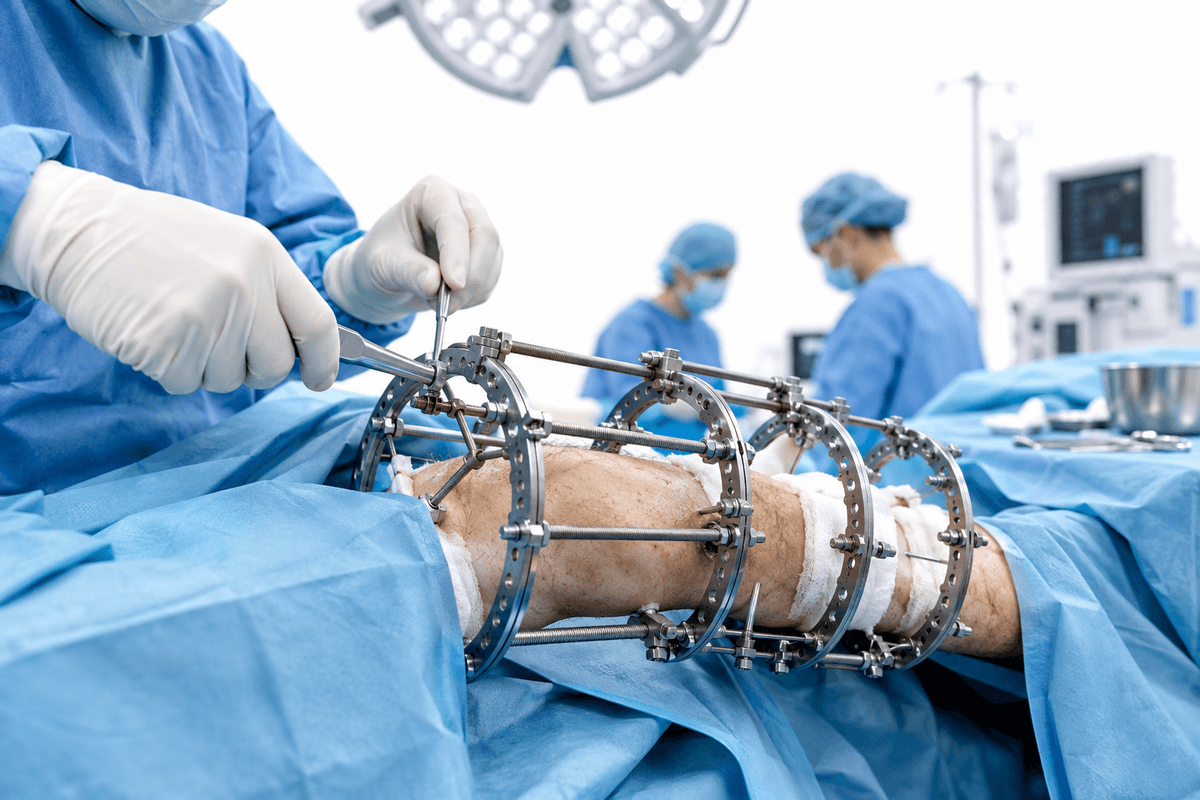
Limb Reconstruction Surgery (LRS) with the Ilizarov method is a specialized procedure that corrects bone deformities, treats limb length differences, and helps complex fractures heal. It uses an external metal frame attached to the bone through wires or pins, allowing gradual correction over time. Dr Samuel Lenald performs this procedure for patients with congenital deformities, trauma injuries, or non-healing fractures.
We believe in honest, upfront disclosure so you can make an informed decision.
A step-by-step look at what happens during this procedure.
Under anaesthesia, the surgeon makes small incisions and inserts wires or pins through the bone above and below the area needing correction. These are attached to metal rings or bars forming an external frame.
If lengthening or major correction is needed, the surgeon carefully cuts the bone in a controlled manner that preserves blood supply, allowing new bone to form in the gap.
The external frame is secured and adjusted to hold the bone segments in the correct position. The frame remains outside the body throughout the treatment period.
After a brief waiting period for initial healing, the frame is adjusted regularly—usually by turning specific nuts a small amount each day. This slowly moves the bone segments apart or realigns them.
As the segments move apart gradually, new bone tissue fills the gap. This process continues until the desired length or alignment is achieved, then the bone is allowed to fully harden before frame removal.
A structured, patient-first approach from first consultation to full recovery.
Dr Samuel Lenald reviews imaging studies carefully to plan the exact placement of pins and the correction strategy needed for each individual case.
The external fixator is applied with attention to avoiding nerves and blood vessels, and positioned to allow the necessary correction while maintaining stability.
Clear instructions are provided on how and when to adjust the frame at home, along with schedules for follow-up visits to monitor progress with X-rays.
Patients and families receive detailed training on cleaning pin sites daily to prevent infection and recognising early warning signs that need attention.
What to expect at each stage of your recovery journey.
The first week involves managing surgical pain, keeping the limb elevated, and learning pin site care. Weight-bearing depends on the specific procedure and will be guided by the surgical team. Hospital discharge typically occurs within a week once pain is controlled and care routines are established.
During the active correction period, daily frame adjustments are made at home following specific instructions. Regular clinic visits monitor progress with X-rays. Pin site cleaning continues daily. Physical therapy helps maintain joint motion and muscle strength despite the frame.
After the desired correction is achieved, the frame remains in place while the new bone hardens. Gradually increasing activity is permitted. Once X-rays confirm solid bone healing, the frame is removed in a minor procedure. Full recovery and return to normal activities continues over several additional months with rehabilitation.
The procedure aims to realign bones and improve limb appearance and function. The degree of correction depends on the initial deformity and individual healing response. Some residual asymmetry may remain in complex cases.
Significant length differences can be reduced or eliminated through gradual bone lengthening. The process requires commitment to the long treatment duration and adjustment protocols. Final outcomes vary based on starting discrepancy and bone quality.
Complex or non-healing fractures may consolidate with the stability and adjustability the frame provides. However, some fractures may still require additional procedures or bone grafting if healing does not progress as expected.
Living with an external frame for many months impacts daily activities, clothing choices, and comfort. Not all functional limitations are resolved, and adjacent joints may develop stiffness requiring ongoing therapy.
The right choice depends on your diagnosis, risks and circumstances — discussed with you at your consultation.
For some fractures and deformities, surgery using plates, screws, or rods placed inside the bone may be suitable. This avoids the external frame but offers less adjustability after surgery. The choice depends on the type and severity of the bone problem.
For smaller limb length differences or when surgery carries high risk, external shoe modifications can compensate for the discrepancy. This non-surgical option does not change the bone itself but may be appropriate based on the degree of difference and overall health.
Mild deformities or stable fractures may be managed without surgery through monitoring, bracing, and exercises to maintain function. This approach is considered when risks outweigh benefits or when the condition does not significantly impair quality of life.
Let's clear up some of the most common myths about limb reconstruction surgery (lrs) & ilizarov.
Get a personalised assessment from an experienced specialist. Understand your options, ask your questions, and decide with confidence.