Treated by Dr. Samuel Lenald at Dr Samuel lenald
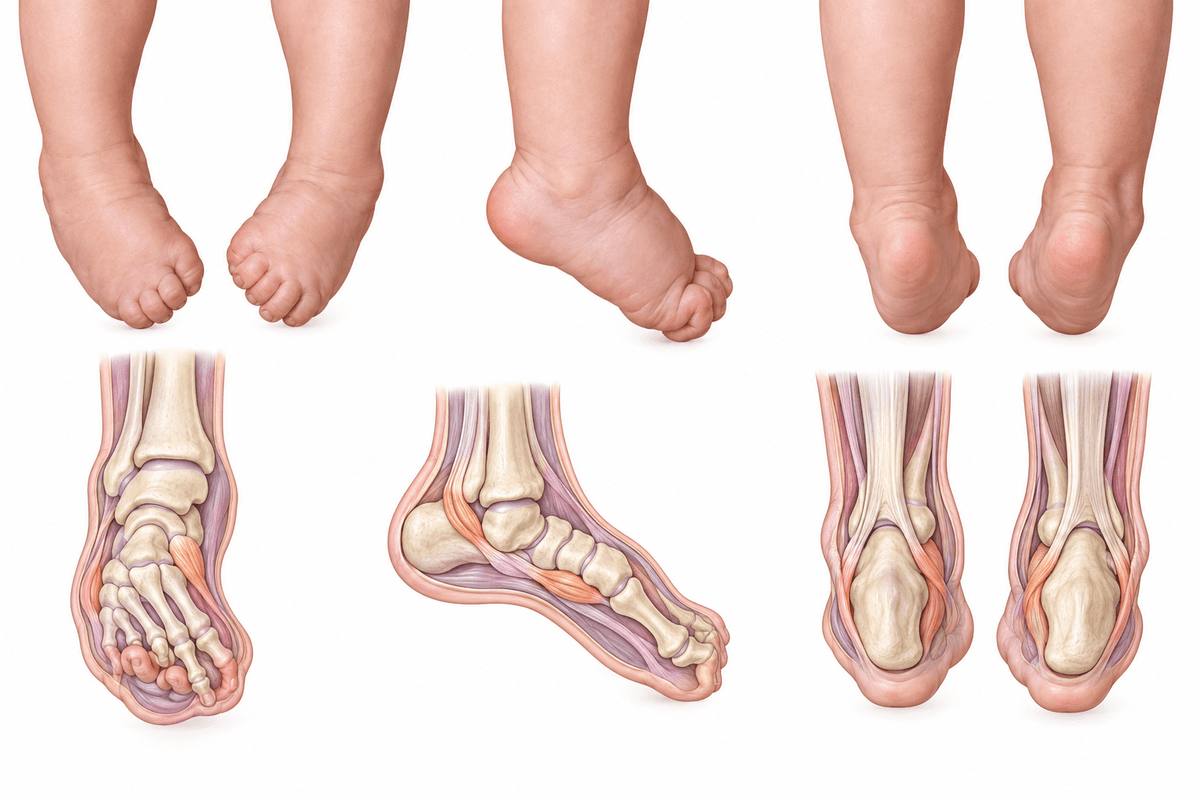
CTEV (Congenital Talipes Equinovarus), commonly known as clubfoot, is a congenital foot deformity affecting newborns in Kadapa and worldwide. The condition causes the foot to turn inward and downward, making walking difficult if left untreated. Early detection and treatment are crucial for successful correction, with most cases responding well to non-surgical interventions when started promptly. Dr Samuel Lenald provides comprehensive clubfoot management using evidence-based protocols tailored to each child's needs.
The most common type occurring without any associated conditions, representing about 80% of all clubfoot cases. It appears as an isolated congenital anomaly with no underlying syndrome or neuromuscular disorder.
Clubfoot associated with genetic syndromes such as arthrogryposis, spina bifida, or chromosomal abnormalities. This type often requires more intensive treatment and has a higher recurrence rate.
A mild form caused by intrauterine positioning rather than structural abnormality. The foot appears turned but has normal range of motion and typically corrects with gentle stretching and manipulation.
Multiple factors can contribute to the development and progression of this condition.
CTEV (club foot) develops gradually. Recognising symptoms early gives you more treatment options.
From conservative to surgical — we always start with the least invasive option first.
A structured, patient-first approach from first visit to full recovery.
Dr Samuel Lenald performs thorough clinical examination at birth or first presentation, assessing the severity using Pirani or Dimeglio scoring systems. Detailed counseling is provided to parents about treatment options, expected outcomes, and the importance of compliance with bracing protocols.
Dr Samuel Lenald initiates the Ponseti method with gentle weekly manipulations and casting, carefully monitoring foot correction. Each cast is applied with precision to achieve optimal correction while ensuring comfort. Achilles tenotomy is performed when indicated, typically in the clinic setting under local anesthesia.
Dr Samuel Lenald provides detailed bracing instructions and closely monitors compliance during follow-up visits. Parents are educated on proper boot and bar application, wear schedules, and signs of recurrence. Regular assessments ensure the foot maintains correction throughout the critical growth period.
For resistant cases or recurrences despite optimal conservative treatment, Dr Samuel Lenald performs appropriate surgical corrections including soft tissue releases or salvage procedures. Post-operative care includes meticulous casting, physiotherapy supervision, and long-term monitoring to achieve and maintain functional feet.
What to expect at each phase of recovery.
During the 6-8 weeks of serial casting, parents observe progressive improvement in foot position with each cast change. The foot gradually moves from the deformed position toward normal alignment, though the baby remains in casts throughout this period requiring careful hygiene and monitoring.
Following cast removal and any tenotomy, the child wears boots and bar 23 hours daily for 3 months, then nighttime only until age 4-5 years. This phase is critical for preventing recurrence, with most children adapting well to bracing and achieving normal developmental milestones including walking.
Regular follow-ups continue through childhood to detect early signs of recurrence and ensure normal foot growth and function. Most children achieve excellent functional outcomes with normal gait, participation in sports, and wear regular footwear without limitations by school age.
Over 95% of children treated with the Ponseti method achieve functional, pain-free feet that allow normal walking, running, and sports participation without significant limitations.
The affected foot achieves near-normal appearance and alignment, though it may remain slightly smaller with a slimmer calf compared to the unaffected side, differences that become less noticeable with age.
Early treatment prevents the severe disability, pain, and social stigma associated with untreated clubfoot, enabling children to lead active, productive lives without mobility restrictions.
The Ponseti method significantly reduces the need for extensive soft tissue release surgeries, with only 5-10% requiring minor procedures compared to historical rates of 80% with surgical-first approaches.
Untreated clubfoot leads to permanent deformity with walking on the outside or top of the foot instead of the sole. This results in painful calluses, difficulty wearing shoes, severe mobility limitations, and social stigma. The child experiences progressive deformity, chronic pain, arthritis in abnormally stressed joints, and significant disability affecting education, employment, and quality of life throughout adulthood.
Parents should seek immediate evaluation if clubfoot is noticed at birth or during prenatal ultrasound, as early treatment within the first few weeks of life yields the best outcomes. Consultation is also urgent if a treated foot shows signs of recurrence such as inward turning, walking on the foot's outer edge, or difficulty fitting into braces. Regular follow-up with Dr Samuel Lenald throughout childhood ensures optimal monitoring and timely intervention if needed.
Early treatment means more options and better outcomes. Book a consultation to understand your condition and explore the right path forward.